
Edge AI for Occupancy Sensing: How On-Device Neural Networks Are Replacing Cloud-Dependent Systems
Edge AI for occupancy sensing refers to the practice of running artificial intelligence models — typically convolutional neural networks — directly on the sensor device itself, processing visual or environmental data locally and transmitting only anonymous occupancy metadata. Unlike cloud-dependent systems that stream raw imagery to remote servers for analysis, edge AI performs all inference on-device, ensuring that no images, video feeds, or personally identifiable information ever leave the sensor. This fundamental architectural shift represents a watershed moment in smart building technology: the ability to deliver enterprise-grade occupancy intelligence with absolute privacy guarantees and minimal latency.
For readers who want a technology-level comparison before diving into the architecture, our breakdown of occupancy sensor technologies covers PIR, thermal, radar, and optical AI side by side.
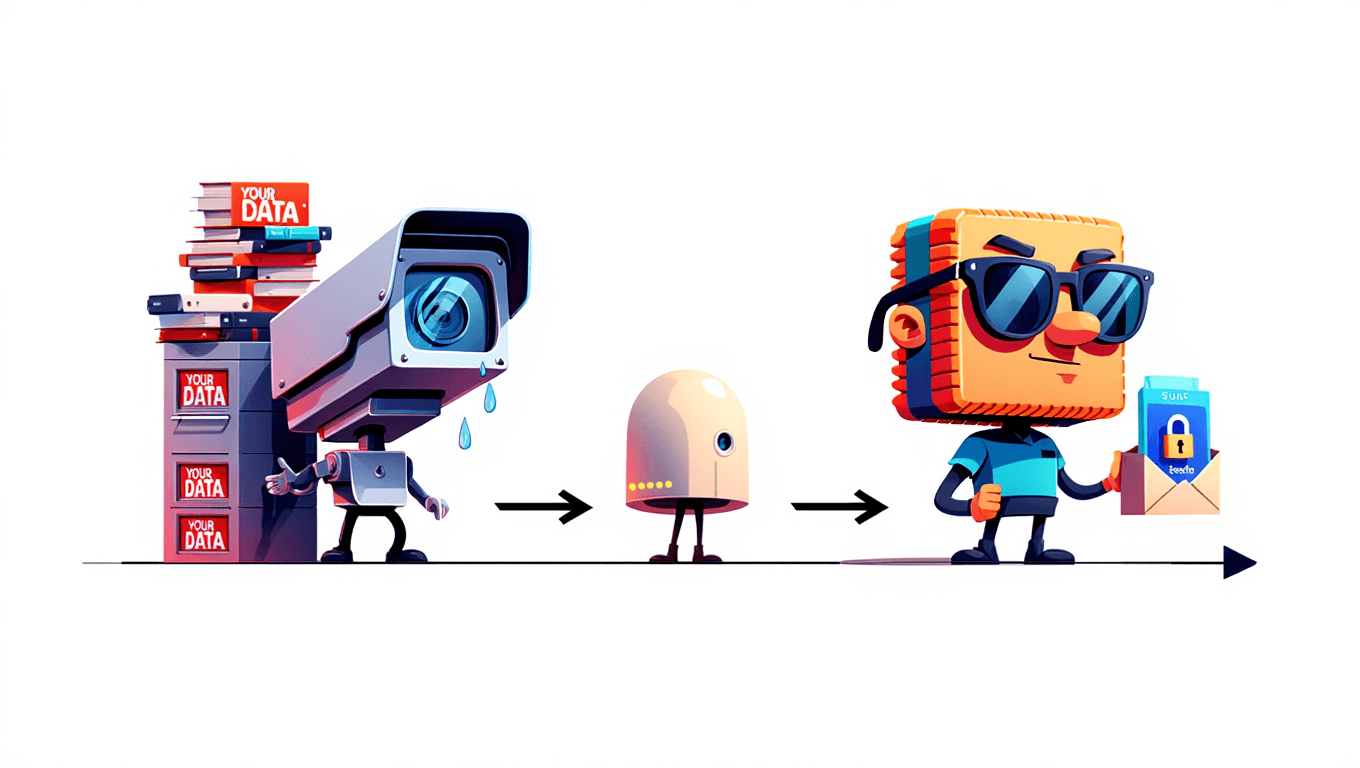
The Evolution from Cloud-Dependent to Edge Sensing
The journey from raw cloud processing to on-device edge AI reflects a broader maturation of building technology and a fundamental reassessment of privacy and efficiency priorities.
First Generation: Cloud-Dependent Processing
Early occupancy sensing systems—and many still in deployment today—relied on a straightforward but problematic model: capture high-resolution video or thermal imagery, stream it over the network to cloud servers, and process it centrally. This approach offered a simple operational model: sensors were dumb endpoints, servers were powerful data processors. However, the costs were substantial and often hidden. Every frame transmitted consumed bandwidth and incurred cloud processing fees. Every image stored represented a privacy liability. Latency was measured in seconds, making real-time facility response impossible. And if the network connection failed, the entire system became blind.
Second Generation: On-Device Simple Algorithms
As edge computing matured, manufacturers began embedding simple occupancy detection algorithms directly on sensors—typically PIR (passive infrared) motion sensors or basic thermal thresholds. These required minimal processing power and eliminated cloud dependencies. The problem: they were too simple. A PIR sensor cannot count occupants—it merely detects presence or absence. Thermal sensors provide zone-level occupancy but cannot identify specific desk usage, direction of movement, or precise positioning. For smart buildings demanding granular, real-time occupancy intelligence, these approaches fell short.
Third Generation: Edge AI with Full Neural Networks
The breakthrough came with advances in model optimization (quantization, pruning, knowledge distillation) that made it feasible to run full convolutional neural networks on edge processors with modest power budgets. Suddenly, sensors could perform sophisticated visual analysis—precise headcount, sub-meter positioning, occupancy zone mapping—entirely on-device. The neural network processes optical sensor data in real-time, extracts the semantic information needed for occupancy intelligence, and outputs only anonymous metadata: coordinate pairs, timestamps, zone counts. The image itself never exists beyond the sensor’s processing pipeline.
Why the Shift Happened: Privacy, Bandwidth, Latency
Three converging pressures drove the shift to edge AI: First, privacy regulations—GDPR, CCPA, and evolving workplace privacy expectations—made image storage and transmission increasingly risky. Organizations realized that the safest data is data that never exists. Second, cloud bandwidth and processing costs became untenable at scale; streaming video from hundreds of sensors across a portfolio consumed enormous infrastructure budgets. Third, latency-sensitive applications (lighting and HVAC optimization, security events, visitor flows) demanded sub-second responsiveness that cloud systems could not provide. Edge AI solved all three simultaneously.
How Edge AI Occupancy Sensing Actually Works
Understanding the technical architecture of edge AI occupancy sensing—from sensor to API output—illuminates why this approach delivers both superior privacy and superior intelligence.
The Pre-Training
In order for the AI model to run on the edge it needs to be pretrained with relevant weights to understand the image captured. This pretraining can take months and is accumulated over years, to achieve the expected high accuracy for a large variety of edge cases — from dark spaces with bright spot lights to abstraction in line of sight and to crowded reception style stand-ups.
The Data Flow: Sensor to Processing to API
A CogniPoint™ edge AI sensor operates as follows: An optical sensor in the device’s field of view captures a frame at 10 FpS. That raw frame is immediately fed to an on-device CNN running in the sensor’s processor. The neural network ingests the pixels map in real-time, identifies occupants, estimates their 2D coordinates (X, Y position within the sensor’s frame), and outputs only that structured metadata. The frame is never stored. It is not transmitted. It is not accessible via any API or interface—it is processed and discarded within milliseconds. The output—a JSON payload with headcount, coordinate arrays, zone assignments, and timestamp—is what flows to the PointGrab Management Platform on the cloud and from there to your platform, BMS, or booking system.
What the Neural Network Extracts
The on-device CNN is trained to identify and localize human occupants within the sensor’s field of view. For each person detected, the model outputs: exact headcount (1, 2, 3, …, N), X/Y coordinate pair in the sensor’s frame (sub-meter precision), confidence score, occupancy zone assignment (based on the commissioned preassigned zones as defined on the PGMP), and timestamp. The model is designed to operate robustly across varying lighting conditions, angles, and occlusions. Because the neural network runs in milliseconds on the edge device, the once-a-minute outcome is algorithm-based average of that minute’s occupancy, providing granular, near-real-time facility visibility. This is not approximate counting (“0, 1, 2, or 3+”). This is exact, repeatable, 1SqM-level intelligence.
Privacy by Architecture
The key architectural principle: no image ever reaches your infrastructure. The sensor’s processor is the only component that ever ‘sees’ the optical image. Everything downstream from the API is anonymous metadata—arrays of coordinate pairs and counts. This has profound implications. First, there is no image storage liability; you cannot be compelled to produce video records you never captured. Second, there is no network transmission of visual data; no intermediate systems see PII. Third, compliance with GDPR’s article 32 (pseudonymization) is inherent in the design, not an afterthought. The data minimization principle is baked into the hardware architecture.
For a complete view of how edge-processed data flows through the building stack — from sensor output through API layers to IWMS platforms — see our guide to workplace sensing infrastructure.
Edge vs Cloud Processing — A Technical Comparison
To fully appreciate why edge AI is reshaping occupancy sensing, it’s instructive to examine the technical tradeoffs directly and honestly.
| Attribute | Edge AI Processing | Cloud AI Processing |
| Where processing happens | On-sensor processor (CPU/edge chip) | Remote cloud server |
| Data transmitted | Anonymous metadata only (coordinates, counts) | Raw images/video streams |
| Latency | Milliseconds (on-device) | Seconds (network + processing) |
| Bandwidth requirements | Minimal (metadata: ~1 KB/min per sensor) | Substantial (video: ~500 MB/hour per sensor) |
| Privacy exposure | None (images never leave sensor) | High (images stored in cloud systems) |
| Accuracy potential | Constrained by on-device model size | Unlimited (can use large models) |
| Processing power | Low (~1–2 W typical) | High (scales with concurrent streams) |
| Model update method | OTA firmware push to sensors | Update cloud inference service |
| Cost per sensor | Higher (includes inference hardware) | Lower initial, scales with cloud compute |
| Scalability | Linear (add more sensors independently) | Non-linear (cloud resources shared) |
| Offline capability | Partial (can buffer; export when reconnected) | None (requires cloud connectivity) |
Note on tradeoffs: Edge AI excels at privacy, latency, and cost-of-ownership at scale. Cloud processing, when necessary for complex multi-modal fusion or advanced analytics, remains viable for supplementary analysis—but should never be the primary repository for occupancy imagery.
Privacy by Design — Not Just Marketing
The term ‘privacy by design’ is often invoked superficially. In edge AI occupancy sensing, it is literal: the lack of image transmission and storage is not a policy choice, but a hardware constraint.
Technical Architecture of Privacy-Preserving Sensing
Consider where data resides at each stage of the pipeline: Stage 1 (sensor optical input) → raw image exists in the sensor’s processor cache memory only; Stage 2 (neural network inference) → the CNN reads the pixels, produces metadata, and the image is overwritten in the cache; Stage 3 (API output) → only metadata (coordinates, counts) is formatted and queued for network transmission; Stage 4 (network transmission) → metadata travels over TLS, never images; Stage 5 (platform storage) → metadata is stored in the platform database (coordinates, occupancy counts, timestamps), not images. There is no stage 6 where images appear. They never exist beyond Stage 1.
Data Minimization at the Hardware Level
Traditional data minimization (as formalized in GDPR) is a governance practice: ‘collect only the data you need.’ Edge AI sensors implement this at the hardware layer. The sensor hardware is not storing, transmitting, or exfiltrating images during operations. It is not a configuration setting you can change. It is not a policy you can violate. It’s not doing any “on the job training” with your real office pictures. The CPU runs the pretrained neural network, discards the input image, and moves on. From a security and audit perspective, this is extraordinarily valuable: you cannot be breached of images you architected yourself to never possess.
GDPR and CCPA Implications
Under GDPR, occupancy metadata (coordinate positions and counts) are often considered pseudonymous—they do not directly identify individuals. With additional technical measures (such as encryption and access controls), pseudonymous data has reduced regulatory burden compared to personal data. Raw camera images, by contrast, are clearly personal data under GDPR because faces and gait patterns can identify individuals even if names are absent. Regulatory authorities across Europe have indicated that on-device processing to pseudonymous output is a compliance best practice. CCPA in California similarly distinguishes between personal information (which triggers consumer rights) and aggregated or pseudonymous information (which may not). Edge AI sensors, by design, operate in the pseudonymous domain.
Why ‘Camera-Based’ ≠ ‘Surveillance’ When Processing Is On the Edge
The word ‘camera’ triggers anxiety in many workplace settings, rightfully so: camera-equipped rooms with footage reviewed by humans or stored indefinitely is surveillance. But edge AI sensors are fundamentally different. The camera input is processed by an algorithm in milliseconds and erased. The only persistent record is occupancy metadata—spatial heatmaps and zone counts, which reveal no individual identity. This is occupancy sensing, not surveillance. The distinction is technical and architecturally enforced. Your privacy officer should understand the difference.
Comparison with Other Sensing Approaches
Understanding how edge AI stacks up against alternatives clarifies its privacy advantages: Camera + Cloud systems transmit images; they are inherently higher-privacy-risk. Thermal sensors have great anonymity built in but have limited accuracy (zone-only, no positioning, can’t cover crowded space). PIR sensors detect motion but cannot count or locate. Wi-Fi-based occupancy infers presence from device associations, which is actually privacy-invasive (device tracking). Radar-based occupancy is emerging and is privacy-friendly, but lacks the positioning accuracy of vision-based approaches and can’t expand beyond humans to objects. Edge AI vision combines the spatial precision of camera-based sensing with the privacy guarantees of edge processing—the best of both worlds.
Beyond the Spec — What Edge AI Actually Delivers
Claims about ‘occupancy sensing accuracy’ are meaningless without specifying what is being measured. Exact headcount? Zone presence? Sub-meter positioning? Accuracy varies dramatically across these dimensions.
Further, with optical sensors the evolution of the AI model allows detecting objects, such as furniture, clothing, equipment and trash. There are multiple use cases in which such evolution of the model is not just improving accuracy after pretraining on additional corner cases, but actually the ability to detect new and meaningful elements that support new use cases in the lifetime of the hardware.
Beyond counting, the neural network outputs a 2D coordinate pair (X, Y) for each detected element, calibrated to the sensor’s field of view (typically +100° horizontal). Positioning accuracy is ±30–50 cm in typical indoor office settings. This enables desk-level occupancy tracking: you can detect when Desk 12B is occupied. It enables “tiny spaces”: are people using that coffee machine? This is impossible with thermal or PIR sensors. Multi-sensor deployments can triangulate positions across overlapping fields of view for even finer precision.
| Capability | Edge AI | Thermal | PIR | Radar |
| Exact headcount | Yes (>98%) | No (zones only) | No (presence only) | No (presence only) |
| Sub-meter positioning | Yes (1 SqM) | No | No | Limited (<1 m, crude) |
| Desk-level granularity | Yes | No | No | No |
| Privacy | Excellent | Excellent | Excellent | Excellent |
| Scope | Humans + Objects | Humans | Heat movement | Humans |

Deploying Edge AI Sensors at Enterprise Scale
Moving from a proof-of-concept (5–10 sensors) to enterprise-wide deployment (500+ sensors across multiple buildings) introduces operational complexity. Edge AI systems are designed for this scale.
Commissioning Hundreds of Sensors
Each sensor must be calibrated (field of view defined), assigned to a space, and networked. PointGrab sensors use standard Wi-Fi (Thread-based mesh for CogniPoint™ 2: Flex) or wired Ethernet. A cloud-based provisioning dashboard allows bulk operations: assign 50 sensors to Building A via CSV upload, define their mount locations and specific areas of interest within it, and validate connectivity. This process, which previously required manual site visits, is now data-entry work. With the PointGrab Management Platform all this can even be done via API; commissioning is then performed by partners on their own platform.
Firmware Management and Model Updates
Deployed sensors run firmware with embedded neural network weights. When new models are released—perhaps improved accuracy on crowded spaces, or expanded to handle new lighting conditions—they must roll out across all sensors safely. PointGrab’s fleet management system allows staged rollouts: first to a test group, then to a production subset if no regressions are detected, then to all sensors. Firmware packages are cryptographically signed to prevent tampering. Rollback to previous versions is supported if an update encountered problems.
Network Architecture Considerations
Edge sensors require connectivity to report occupancy data. In most modern buildings, this is Wi-Fi or Ethernet. Thread mesh networking (CogniPoint™ 2: Flex) creates self-healing local networks and reduces reliance on a central AP. For remote or manufacturing facilities, cellular backhaul (LTE/5G) is an option. From a security perspective, all sensor-to-platform communication is encrypted (TLS). API credentials are rotated regularly. For a deeper look at how the occupancy data API layer enables integration with BMS, IWMS, and analytics platforms without vendor lock-in, see our guide on building an application-agnostic occupancy data layer. Network isolation (VLAN, firewall rules) is recommended to segment occupancy data from general IT infrastructure.
Performance Monitoring at Scale
With hundreds of sensors, how do you ensure they are all functioning correctly? PointGrab provides dashboards showing sensor health: last check-in timestamp, network connectivity status, inference latency, and anomaly detection (e.g., a sensor reporting zero occupancy when historical patterns suggest people should be present). With proactive support, alerts notify administrators if sensors go offline. Logs capture device vitals, inference latency, frame processing rates, and model outputs for auditing and debugging.
Integration with BMS and IWMS Systems
Building management systems (BMS) and integrated workplace management systems (IWMS) control HVAC, lighting, access control, and space booking. For occupancy intelligence to drive facility automation, it must integrate seamlessly with these platforms. PointGrab sensors expose occupancy data via REST APIs in both push and pull modes. BMS integrators can query real-time occupancy endpoints and react immediately. REST APIs also allow polling for historical occupancy patterns, enabling post-occupancy analysis and forecasting.
Conclusion: Edge AI as the Smart Building Standard
Edge AI for occupancy sensing represents a maturation of building technology. The shift from cloud-dependent systems to on-device neural networks is not merely incremental; it addresses fundamental challenges in privacy, latency, bandwidth, and cost that have constrained smart building deployments for years. When evaluating occupancy sensing for a campus-wide rollout, the architecture choice—edge vs. cloud—carries profound implications: edge AI delivers exact, real-time occupancy intelligence with absolute privacy guarantees and minimal infrastructure overhead. Cloud-based approaches, by contrast, require continuous image transmission, impose regulatory complexity, incur scaling costs, and introduce privacy risk that grows with data retention. For enterprise-scale smart building deployments, edge AI is increasingly the default choice. PointGrab’s CogniPoint™ sensors exemplify this architecture: optical sensors, on-device CNNs, anonymous metadata APIs, and mature deployment simplicity. As workplace demands evolve—hybrid work, space optimization, energy efficiency—occupancy intelligence will become as foundational as lighting and HVAC. Edge AI makes this intelligence achievable without sacrificing privacy or operational complexity. The future of smart buildings is edge-first.
For privacy-conscious deployments, see our GDPR-ready privacy guide. And for the full sensor technology landscape, the PIR vs thermal vs optical vs edge AI comparison puts on-device intelligence in context.
Frequently Asked Questions
What is edge AI in occupancy sensing?
Edge AI refers to running artificial intelligence models directly on a sensor device, enabling local data processing without cloud dependency. For occupancy sensing, this means the sensor’s processor executes a neural network on optical data locally, outputting only occupancy metadata (headcount, positions) while the underlying images are immediately discarded. This provides privacy, latency reduction, and bandwidth efficiency.
How do on-device neural networks process occupancy data?
The sensor captures frames from its optical field of view at high fps rate. Each frame is fed to an embedded CNN (convolutional neural network), pretrained for occupancy detection and typically running in milliseconds. The network identifies occupants, estimates their 2D coordinates, and outputs a structured metadata payload (headcount, X/Y positions, zone assignments). The frame itself is never stored or transmitted; it is processed and discarded in real-time in cache memory.
Is edge AI more private than cloud-based occupancy sensing?
Yes, significantly. Edge AI systems process images locally on the CMOS sensor and transmit only anonymous metadata (coordinates, counts, timestamps). Images never reach the cloud. Cloud-based systems, by contrast, must transmit or store images on remote servers, creating privacy risk, regulatory exposure, and compliance complexity. From a GDPR and CCPA perspective, edge AI’s data minimization and pseudonymization align with regulatory best practices.
What accuracy can edge AI occupancy sensors achieve?
Edge AI sensors can deliver exact headcount with >98% accuracy, sub-meter positioning (±30–50 cm), and desk-level granularity. This far exceeds thermal sensors (zone-only, no positioning), PIR sensors (presence/absence, no counting), and approximate counting systems (0–5, 5–10, 10+ people brackets). Real-time update frequency enables responsive facility automation.
Can edge AI sensors work without internet connectivity?
Partially. Edge AI sensors can continue to process occupancy locally and buffer results in local storage if network connectivity is temporarily lost. When connectivity returns, buffered data is transmitted. For true offline operation, you forfeit cloud platform visibility, but the sensor itself remains functional. This is a significant advantage over cloud-only systems, which become blind if the network fails.
How are edge AI models updated on deployed sensors?
Over-the-air (OTA) firmware updates. The sensor downloads a signed firmware package containing updated neural network weights and model parameters during scheduled maintenance windows. The update is validated (cryptographic signature check) and installed in-place. Rollback is supported if an update introduces regressions. This allows continuous model improvement in production without revisiting physical sites.